
.png)
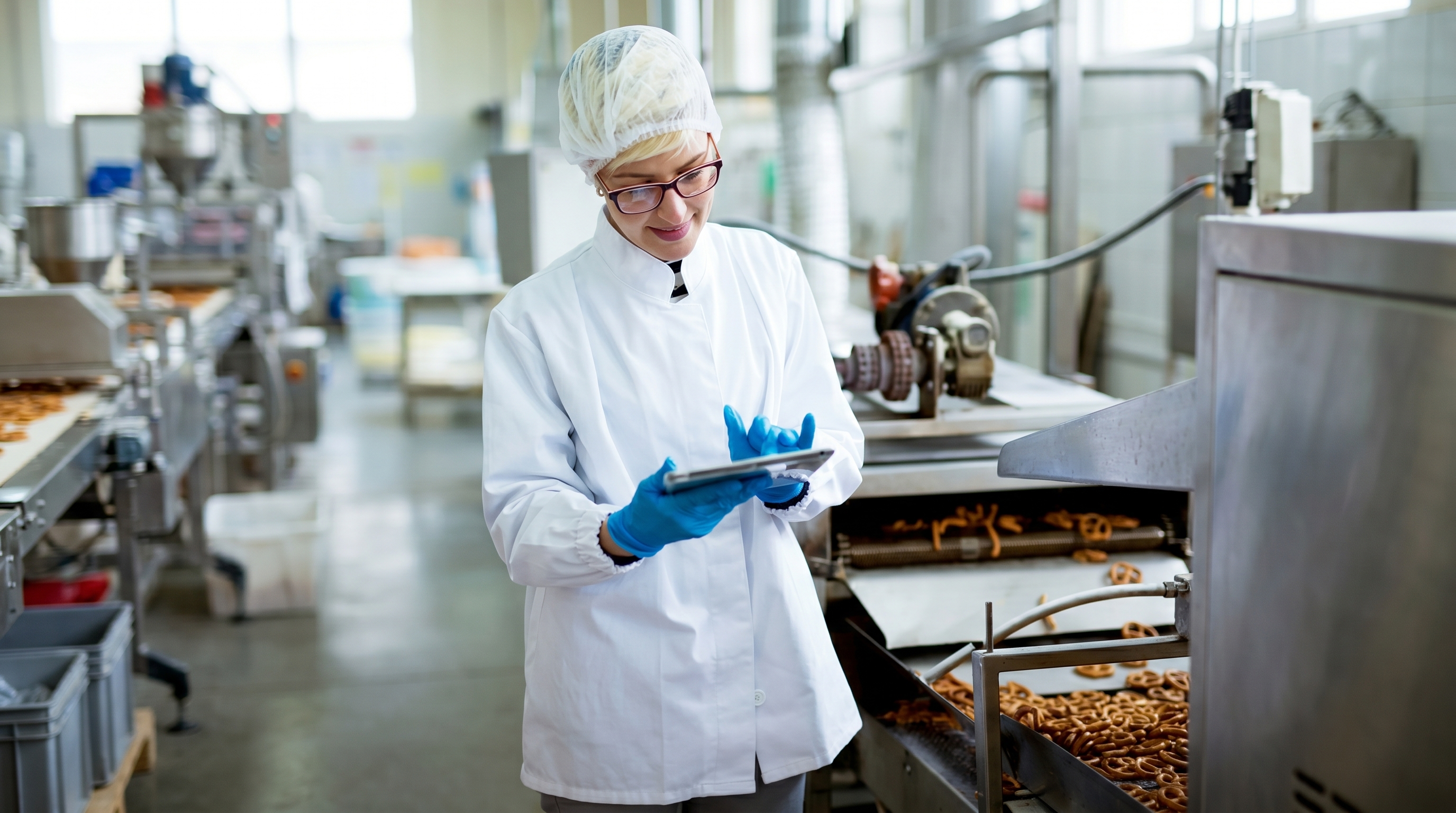
When your graphics vary from batch to batch, your brand pays for it. A label that looks perfect in the proof and fails on the line is not a minor inconvenience. It is rework, scrapped inventory, a stalled production run, and in the worst case a compliance problem. In food manufacturing, the environment is unforgiving, and graphics that were never engineered for that environment do not last. The good news is that durability is not luck. It is the result of disciplined material selection, proven adhesives and inks, and a manufacturing process that produces the same result every single time.
This guide walks through what "real-world conditions" actually mean in a food plant, the hidden costs of graphics that fail, and how to evaluate a graphics partner before the first order ships.
Why Food Manufacturing Is Uniquely Hard on Graphics
A food production floor is one of the most demanding environments a printed graphic can face. Few other settings combine moisture, heat, cold, chemicals, and constant handling the way a processing plant does.
Consider what a single label or applied graphic may go through in a normal shift. It might be sprayed during a high-pressure washdown, wiped with sanitizing chemicals, moved from a freezer to a warm staging area, handled by gloved hands, and rubbed against equipment or packaging dozens of times. Each of those exposures attacks a different weakness. Moisture lifts adhesives. Heat softens films and fades inks. Cold makes substrates brittle. Sanitation chemicals break down surface coatings. Abrasion wears printed copy until it becomes illegible.
A graphic that performs beautifully in an office or a retail aisle can begin failing within days on a production floor. That is why the question is never simply "does this look right." The question is "will this survive everything the plant does to it, every day, without changing." When the answer is no, the failures show up in places that are expensive to fix.
The Hidden Cost of Graphics That Fail
Graphics failures rarely announce themselves up front. They surface downstream, where they are harder to trace and more costly to absorb.
The most visible cost is rework. When a batch of labels peels or smears, that product cannot ship as is. Someone has to pull it, relabel it, or scrap it. That labor and material was already paid for once, and now it is being paid for again. The second cost is delay. A line that stops because the applied graphics are not adhering is a line that is not producing. In a plant running tight schedules, even a short stop ripples into missed shipments.
Then there is the cost that does not show up on an invoice. When a customer receives product with a faded code, a peeling label, or graphics that look different from the last shipment, your brand looks inconsistent. Inconsistency in a regulated industry reads as a lack of control, and that perception is difficult to reverse. Worst of all, when a safety label, lot code, or regulatory marking becomes unreadable, you have moved from a quality issue to a compliance exposure.
The lesson is direct. The cheapest graphic at the point of purchase is frequently the most expensive graphic by the time it has caused a recall risk, a relabel project, and a frustrated customer.
What "Real-World Conditions" Actually Means
Before you can choose graphics that survive, you have to be specific about what they need to survive. Vague requirements produce vague results. Strong specifications produce durable ones. In a food manufacturing context, "real-world conditions" usually breaks down into a few measurable categories.
Washdown and moisture. Will the graphic face high-pressure water, steam, or sustained humidity? Both the substrate and the adhesive have to tolerate repeated wetting without lifting, bubbling, or wicking moisture underneath.
Chemical exposure. Sanitizers, caustics, and cleaning agents are part of daily operations. The print and any protective layer need to resist the specific chemistries used in your facility, not chemicals in general.
Temperature range. Freezer storage, cold rooms, hot fill, and warm staging areas all stress materials differently. A film that bonds well at room temperature may not bond at all when applied to a cold or condensation-covered surface.
Abrasion and handling. Graphics that are touched, stacked, conveyed, or rubbed need surface protection so the printed information stays legible through the product's full handling life.
Surface energy of the application substrate. Stainless steel, coated cardboard, flexible film, and powder-coated equipment all accept adhesives differently. The right product for one surface can fail on another.
When you can describe your conditions in these terms, you give a manufacturer the information they need to engineer the right solution rather than guess at it.
How to Evaluate Durability Before You Buy
Durability is decided long before a graphic reaches your floor. It is determined by the materials, the construction, and the consistency of the process behind them. Here is what to scrutinize.
Substrate and film selection. Ask what material is being recommended and why it suits your specific exposures. A capable partner will match the film to your conditions and explain the reasoning, not default to whatever is on hand.
Adhesive system. The adhesive is where most field failures begin. Confirm it is rated for your temperature range, your surface, and your moisture exposure. Cold-apply, wet-surface, and high-tack permanent adhesives all exist for different reasons.
Ink and print method. Inks vary widely in their resistance to UV fading, abrasion, and chemical contact. The print method matters as much as the ink itself. Ask how the printed image holds up after repeated cleaning.
Protective lamination or overcoat. For graphics facing abrasion or aggressive sanitation, a protective topcoat or laminate is often what separates a graphic that lasts months from one that lasts years.
Testing and validation. A serious manufacturer can speak to how a construction has been validated. Whether through abrasion testing, chemical resistance checks, or adhesion verification on your actual substrate, validation turns a promise into evidence.
Compliance documentation. In food manufacturing, food-contact suitability and legibility of required markings are not optional. Confirm that the materials are appropriate for the proximity to food and that regulatory information will remain readable through the product's life.
The supplier that answers these questions plainly is the one worth trusting. The supplier who cannot is the one whose graphics you will be reworking.
The Role of Disciplined Manufacturing
Material selection gets you a graphic that can survive. Disciplined manufacturing gets you a graphic that survives every time. This is the difference that batch-to-batch consistency exposes.
A print shop can produce a good result once. A manufacturing partner produces the same result on the first unit and the ten-thousandth, across runs separated by months. That consistency comes from controlled processes, documented specifications, and quality checks that catch variation before it ships rather than after it fails on your line. When color, adhesion, and durability are held to the same standard on every order, you stop building contingency into your schedule for graphics that might not hold.
That is the practical meaning of operational peace of mind. You are not inspecting incoming graphics with suspicion. You are not keeping a relabel plan on standby. You order, you receive, and the graphics perform exactly as the last batch did, because the process that made them did not change.
A Short Checklist for Your Next Order
Before you approve graphics for a food manufacturing application, confirm the following:
- The substrate and adhesive are matched to your specific moisture, chemical, and temperature exposures.
- The ink and print method are rated to resist fading and abrasion under repeated cleaning.
- Protective lamination is specified where abrasion or sanitation demands it.
- The construction has been validated on your actual application surface.
- Food-contact suitability and regulatory legibility are documented.
- The manufacturer can demonstrate process control that delivers the same result batch to batch.
Make the Floor the Standard, Not the Proof
Graphics that look right on a screen are easy to find. Graphics that survive a food production floor, shift after shift, batch after batch, are the result of engineering and discipline. When you specify your real conditions, scrutinize the materials, and choose a partner built for consistency, you stop paying the hidden tax of rework and delay. You get graphics that do their job quietly and reliably, which is exactly what they were supposed to do all along.
If batch-to-batch variation has been costing you, it is worth a conversation about how disciplined manufacturing can put that problem behind you for good.